Understanding SEO in Simple Terms
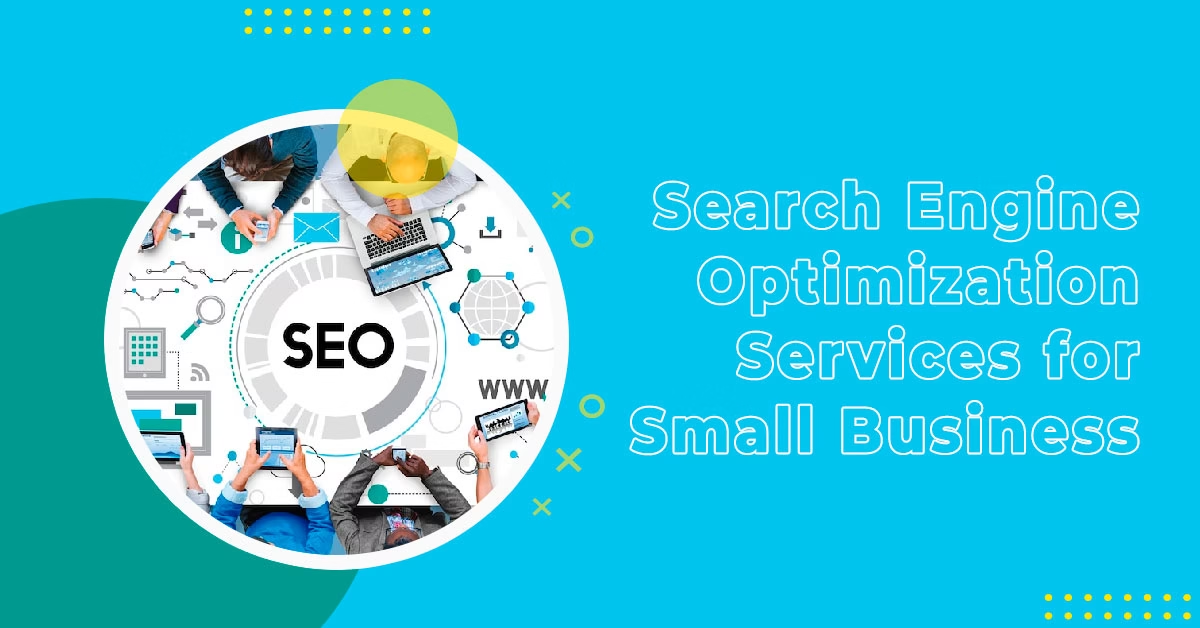
Search Engine Optimization Services for Small Business Search engine optimization, often abbreviated as SEO, is the craft of making a website more visible in organic (non-paid) search results. At its essence, it is about alignment—aligning your content with what people are actively searching for. When executed properly, SEO transforms a website from a static brochure into a dynamic acquisition channel that attracts qualified prospects day and night.
For small businesses, this visibility is not merely advantageous; it is existential. Without it, even the most exceptional products remain undiscovered.
How Search Engines Actually Rank Websites
Search engines operate through intricate algorithms designed to deliver the most relevant and trustworthy results. They crawl websites, index their content, and evaluate hundreds of ranking signals. These include keyword relevance, site architecture, backlink authority, user experience, and engagement metrics.
It is not a single factor that determines rankings but a confluence of signals. Think of it as a digital meritocracy where credibility, usefulness, and accessibility converge.
Why Small Businesses Can Compete with Big Brands
Contrary to popular belief, SEO levels the playing field. Large corporations may possess vast resources, yet they often lack agility. Small businesses, on the other hand, can target niche keywords, produce highly specific content, and build authentic local connections.
Precision often triumphs over scale. In SEO, relevance can outweigh sheer volume.
The Real Benefits of Search Engine Optimization Services for Small Businesses
Consistent Organic Traffic Without Paying for Ads
Unlike paid advertising, which ceases the moment budgets are exhausted, SEO generates a compounding stream of organic traffic. Once rankings are established, they can persist for months or even years with proper maintenance.
This creates a sustainable pipeline of visitors. Predictable. Scalable.
Building Trust and Credibility Online
Users inherently trust organic results more than advertisements. Appearing on the first page signals authority. It conveys legitimacy without saying a word.
Over time, consistent visibility fosters brand familiarity. Familiarity, in turn, breeds trust.
Higher Conversion Rates from Targeted Visitors
SEO traffic is intent-driven. These users are actively searching for solutions, not passively scrolling. As a result, they are far more likely to convert.
The difference is subtle but profound. SEO does not interrupt—it answers.
Long-Term Growth vs Short-Term Marketing Wins
Paid campaigns deliver immediacy. SEO delivers endurance. It builds a digital asset that appreciates over time, rather than depreciating with each click.
For Search Engine Optimization Services small businesses seeking stability, this distinction is critical.
Types of Search Engine Optimization Services Small Businesses Need
On-Page SEO (Content, Keywords, Structure)
On-page SEO focuses on optimizing individual pages. This includes strategic keyword placement, compelling meta descriptions, structured headings, and coherent internal linking.
Every page becomes a deliberate entry point. Nothing is accidental.
Technical SEO (Speed, Mobile-Friendliness, Indexing)
Technical SEO ensures that search engines can efficiently crawl and interpret your site. It involves improving load speeds, ensuring mobile responsiveness, and resolving indexing issues.
A beautiful website is useless if it remains invisible to search engines.
Off-Page SEO (Backlinks and Authority Building)
Off-page SEO revolves around building authority through backlinks. Each link acts as a vote of confidence from another site.
However, not all votes are equal—quality eclipses quantity.
Local SEO (Google Maps and “Near Me” Searches)
Local SEO targets geographically relevant searches. It ensures your business appears in map results and local listings when users search for nearby services.
For brick-and-mortar businesses, this is indispensable.
Local SEO: The Game Changer for Small Businesses
Optimizing Google Business Profile
A fully optimized Google Business Profile enhances visibility in local search results. Accurate information, compelling descriptions, and updated images all contribute to higher engagement.
It is often the first impression a customer encounters.
Getting Reviews That Boost Rankings
Customer reviews serve dual purposes: they influence rankings and shape perception. Positive, authentic reviews build credibility and encourage conversions.
Silence, on the other hand, raises suspicion.
Local Citations and Directory Listings
Consistency across online directories reinforces trust signals. Name, address, and phone number must remain uniform across all platforms.
Even minor discrepancies can dilute authority.
Targeting Location-Based Keywords
Incorporating geographic modifiers into keywords allows businesses to capture localized intent. Phrases like “near me” or specific suburb names can dramatically improve relevance.
Precision again proves powerful.
Keyword Research for Small Business Success
Finding Low-Competition, High-Intent Keywords
The ideal keyword strikes a balance between search volume and competition. Small businesses benefit most from targeting underserved niches with clear intent.
These are the hidden opportunities others overlook.
Understanding Search Intent (Buyer vs Browser)
Not all searches are equal. Some users are researching, others are ready to purchase. Distinguishing between informational and transactional intent is crucial.
Content must match intent. Otherwise, it misses the mark.
Long-Tail Keywords That Drive Real Sales
Long-tail keywords are more specific and less competitive. While they attract fewer searches individually, they often convert at a much higher rate.
They are precise. Focused. Effective.
Tools and Strategies for Smart Keyword Selection
Keyword research tools provide invaluable insights into search volume, competition, and trends. Combining these insights with industry knowledge leads to strategic selection.
Data informs. Strategy refines.
Content Marketing as the Core of SEO
Creating Blog Content That Ranks and Converts
High-quality blog content serves as the backbone of SEO. It educates, engages, and guides users toward solutions.
Each article should answer a question thoroughly. No fluff. No ambiguity.
Writing for Humans First, Search Engines Second
While optimization is important, readability remains paramount. Content must resonate with human readers before satisfying algorithms.
Clarity always wins.
Content Clusters and Topic Authority
Organizing content into clusters around core topics establishes authority. It signals expertise and improves internal linking structures.
Authority is not claimed—it is demonstrated.
Updating Old Content for Better Results
Refreshing outdated content can yield significant gains. Updating statistics, improving structure, and adding new insights revitalizes rankings.
Neglected content is wasted potential.
Technical SEO Essentials You Can’t Ignore
Website Speed Optimization
Slow websites deter users and harm rankings. Optimizing images, reducing code bloat, and leveraging caching can significantly improve load times.
Speed is not optional. It is expected.
Mobile Optimization and UX
With mobile traffic dominating, responsive design is essential. Navigation must be intuitive. Content must be accessible.
User experience directly impacts retention.
Fixing Crawl Errors and Broken Links
Broken links disrupt user journeys and hinder search engine crawling. Regular audits ensure a seamless experience.
Small issues, if ignored, compound quickly.
Secure Websites (HTTPS) and Core Web Vitals
Security and performance metrics play a pivotal role in rankings. HTTPS encryption and strong Core Web Vitals scores enhance trust and usability.
Trust is technical as much as it is emotional.
Link Building Strategies for Small Businesses
Why Backlinks Still Matter
Backlinks remain one of the most influential ranking factors. They validate your site’s authority in the eyes of search engines.
Without them, growth is constrained.
Ethical vs Risky Link Building Techniques
Ethical strategies focus on earning links through value. Risky tactics attempt to manipulate rankings and often result in penalties.
Shortcuts rarely end well.
Guest Posting and Outreach Strategies
Collaborating with other websites through guest posts expands reach and builds credibility. Thoughtful outreach fosters genuine relationships.
Connections matter.
Leveraging Partnerships and Local Connections
Local partnerships can yield valuable backlinks and increased visibility. Community engagement translates into digital authority.
Offline relationships influence online success.
Choosing the Right SEO Service Provider
Freelancers vs Agencies vs In-House
Each option offers distinct advantages. Freelancers provide flexibility, agencies offer comprehensive services, and in-house teams ensure full control.
The right choice depends on scale and resources.
What to Look for in an SEO Expert
Experience, transparency, and proven results are essential. An effective SEO professional communicates clearly and sets realistic expectations.
Promises mean little without evidence.
Red Flags to Avoid (Scams and False Promises)
Guaranteed rankings and overnight success claims are warning signs. SEO is a long-term endeavor.
If it sounds too good, it likely is.
Questions to Ask Before Hiring
Understanding methodology, reporting practices, and timelines helps ensure alignment. Clarity at the outset prevents misunderstandings later.
Due diligence is indispensable.
SEO Pricing: What Should Small Businesses Expect?
Common Pricing Models (Monthly, Project-Based, Hourly)
SEO services are typically priced through retainers, one-time projects, or hourly rates. Each model serves different needs.
Flexibility allows for tailored solutions.
What Influences the Cost of SEO Services
Factors such as competition, industry complexity, and scope of work determine pricing. More competitive niches require greater investment.
Ambition has a cost.
Budget-Friendly SEO Options
Small businesses can start with focused strategies—local SEO, content creation, and technical fixes—before scaling efforts.
Start small. Scale smart.
ROI: Measuring the Value of SEO Investment
Return on investment is measured through increased traffic, leads, and revenue. Over time, SEO often outperforms other channels in cost efficiency.
Patience yields dividends.
DIY SEO vs Hiring Professionals
What You Can Do Yourself
Basic optimizations—keyword research, content creation, and on-page improvements—can be handled internally.
Knowledge empowers.
When to Bring in an Expert
Complex technical issues and competitive markets often require professional expertise. Specialists accelerate results.
Efficiency matters.
Time vs Money Trade-Off
DIY SEO saves money but consumes time. Hiring experts requires investment but frees internal resources.
Choose based on priorities.
Hybrid Approaches That Work
Combining internal efforts with external expertise often delivers the best results. It balances control with specialization.
Collaboration is powerful.
Common SEO Mistakes Small Businesses Make
Ignoring Local SEO Opportunities
Failing to optimize for local search results in missed opportunities. Visibility within your community is crucial.
Proximity drives action.
Keyword Stuffing and Poor Content Quality
Overloading content with keywords compromises readability and credibility. Quality must always take precedence.
Less is often more.
Not Tracking Performance
Without analytics, progress remains. Data provides direction and informs strategy.
Measurement is essential.
Expecting Instant Results
SEO requires time. Unrealistic expectations lead to frustration and premature abandonment.
Consistency is key.
Measuring SEO Success
Key Metrics That Actually Matter
Organic traffic, conversion rates, and keyword rankings are fundamental indicators. Vanity metrics hold little value.
Focus on impact.
Using Tools Like Google Analytics and Search Console
These tools offer insights into user behavior, performance, and technical health. They are indispensable for informed decision-making.
Visibility into data drives clarity.
Tracking Rankings, Traffic, and Conversions
Monitoring these metrics reveals trends and opportunities. Adjustments can then be made proactively.
Adaptation ensures growth.
Adjusting Strategy Based on Data
SEO is iterative. Strategies must evolve based on performance insights.
Static approaches stagnate.
Future Trends in Small Business SEO
Voice Search and AI Search Optimization
Voice queries are conversational and intent-driven. Optimizing for natural language is becoming increasingly important.
Search is becoming more human.
The Rise of Zero-Click Searches
Users often find answers directly on search results pages. Optimizing for featured snippets can capture this visibility.
Attention shifts quickly.
Importance of E-E-A-T (Experience, Expertise, Authority, Trust)
Search engines prioritize credible sources. Demonstrating expertise and trustworthiness enhances rankings.
Reputation matters more than ever.
Adapting to Constant Algorithm Changes
Algorithms evolve continuously. Staying informed and adaptable ensures sustained performance.
Change is the only constant.
Getting Started with SEO Today
Step-by-Step Action Plan for Beginners
Begin with keyword research, optimize your website, create valuable content, and build backlinks. Each step builds upon the last.
Progress is incremental.
Quick Wins You Can Implement Immediately
Improving page speed, updating metadata, and optimizing images can yield rapid improvements.
Small changes create momentum.
Building a Long-Term SEO Strategy
A cohesive strategy aligns content, technical optimization, and link building. It provides direction and consistency.
Without a strategy, effort dissipates.
Staying Consistent for Sustainable Growth
SEO rewards persistence. Regular updates, continuous optimization, and ongoing analysis ensure lasting success.
Consistency compounds.